China Shipment Consolidation: A Checklist for Multiple Suppliers
By Vincent Yu · Published 2026-11-01

Decide whether supplier consolidation fits your shipment
Buyer consolidation means goods from several of your suppliers are collected and combined before international dispatch, so they travel as one arrangement for one consignee. DHL describes inbound consolidation as collecting goods from several sources, including several in China, into one shipment; DSV describes a buyer's consolidation for one consignee.
This is not automatically the same as a forwarder's carrier groupage. Maersk defines freight consolidation as combining less-than-full-load cargo at an origin point for transport as one shipment. That is freight terminology, and groupage can involve several unrelated shippers, which is a different commercial scope.
| Term | Whose goods are combined | What to confirm |
|---|---|---|
| Buyer consolidation | Your own suppliers' goods, for one consignee | Receiving scope, release authority, exception handling |
| Carrier or forwarder groupage | Cargo from different shippers | Cargo data, documents, cut-off and freight terms |
| Dedicated container product | Provider-specific service (DSV names one example) | Whether your volume suits it at all |
Combined cartons do not automatically fill, or need, a dedicated full container. Treat consolidation as an option to test against separate shipments on the same scope, not as a promise of savings.
Separate shipping may suit a project where suppliers are ready far apart or extra handling and waiting costs outweigh the freight difference. Request written estimates for both options. For production and artwork coordination across suppliers, use the multi-supplier approval and coordination guide.
Separate courier delivery, warehouse receipt, counts and release
Keep four records apart: the courier delivery scan, warehouse carton receipt, agreed item-level count or inspection, and your written release. A courier scan reports a delivery event; it does not verify carton contents. Ask for the receiving record before treating the goods as counted or approved.
| Evidence state | What it can show | What it does not show | Record to keep |
|---|---|---|---|
| Courier delivered scan | A courier-reported delivery event | Verified contents, unit count or product condition | Tracking reference and scan time |
| Warehouse carton receipt | Cartons are in physical custody | Unit quantity or product approval | Receipt record with carton labels |
| Agreed count or inspection | Whatever scope was agreed in writing | Anything outside that scope | Count sheet, photos, stated limits |
| Buyer written release | A named person authorized the lot to join dispatch | Nothing about quality unless checked | Dated release per PO or lot |

Counting and inspection are scope to agree, not automatic services. Counting may mean carton count only, or opening cartons and counting units. Inspection means some product check. Write down which applies and what stays unverified. If scope is carton count only, say so in your register: item quantities remain unverified.
ShipBob's receiving model is a useful pattern, not a universal rule. It separates expected quantity (what was said to be sent), received quantity (what arrived) and stowed quantity (what was added to available inventory). Its dock scan marks a box as arrived, and re-scanning does not change that status. Other providers use different fields.
Keep three columns per PO: custody, quantity verification and product approval. Warehouse receiving is not product approval. After goods arrive, the receiving checks at the destination warehouse are covered in the China-to-3PL receiving guide.
Shortages, wrong cartons and a late supplier
Log every mismatch in an exception ledger before it is discussed with a supplier. Each entry needs the inbound reference (supplier, PO, SKU, expected cartons and units), what was observed, photos, expected versus observed quantity, the latest packing-list revision, an owner, a deadline and the effect on the shipment.
- Wrong carton: does the supplier label match the inbound record, and is the carton mapped to a PO?
- Revised paperwork: was the packing list changed after dispatch, and who confirmed the reason?
- Shortage: is the gap in cartons or in units, and was the carton opened under the agreed count scope?
- Reference document: which packing-list revision is the one everyone is measuring against?
- Closure: who is allowed to mark each exception closed or restricted before release?
A late supplier needs a written cut-off before dispatch, not an improvised call on loading day. Arrival before loading does not by itself authorize a lot to join the shipment. Choose between hold, split and remove using written estimates, then update the shipment record or packing list.
| Option | What happens | Estimates to get in writing | Shipment record to update |
|---|---|---|---|
| Hold | Ready lots wait for the late lot | Storage and handling for the waiting period; effect on sales dates | Record the waiting lots; add the late lot only after checks and approval |
| Split | Ready lots ship now; late lot follows separately | Second freight and handling; documents and labels for the later part | Create a separate record for each departure |
| Remove | Late lot leaves this shipment and is rebooked later | Removal handling, storage, rebooking terms | Remove the lot from this departure and record the later plan |
Illustrative scenario (hypothetical): a home-goods brand has four suppliers. Three lots are packed; the fourth will finish about a week after planned dispatch. The buyer requests written estimates for holding versus splitting, confirms the later part's documents would match, and sets a cut-off. The decision follows the estimates, not a guess at lost sales.
Illustrative scenario (hypothetical): two suppliers' cartons show delivered, but one is crushed and another carries a label that does not match the inbound record and revised packing list.
The buyer records count and condition first, opens only within agreed scope, logs both items with photos, holds the affected lot and releases it only once the named authority closes or restricts each exception.
Optional repacking and final cargo data
Agree optional repacking, de-boxing, compression or palletizing as separately scoped work before it starts. ShipBob, for example, distinguishes standard fulfillment from custom packing and kitting arrangements that need setup. Confirm your own provider's included work and ask whether any proposed change is a carrier requirement or an optional service.
Name the work precisely. Assembly can mean joining parts; kitting groups finished items. Neither is the same as repacking cartons. Approve product-protection requirements and the method in writing before work starts, and do not assume compression always saves money; damage risk and extra handling charges can offset any volume change.
- Original-to-new carton mapping by SKU
- Before-and-after external carton records or photos
- Written protection requirements for fragile or mixed categories
- Approval reference from the named buyer authority
- Updated packing list and document drafts after any approved change
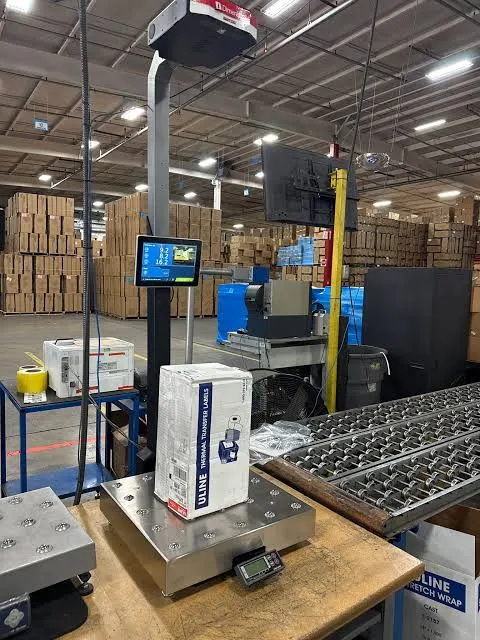
Use final packed carton identities, external dimensions, gross weights and matching shipment documents to confirm the forwarder quote. Before packing is final, ask for a provisional estimate that identifies its assumptions and revision rules. Keep measured final data separate from the factory's earlier estimates.
Illustrative scenario (hypothetical): a retailer asks the warehouse to de-box and palletize to reduce volume but has not approved a method or updated the forwarder. The sensible order is quote the work, approve protection and method, record the carton mapping, then refresh dimensions, weights and documents before the freight quote is locked.
Compare consolidated and separate shipping before release
Compare the two options on the same final cargo, destination, customs scope and delivery point, and across every cost line, not only the international leg. Mark each line as confirmed in writing, estimate or unknown. Unknown stays unknown and is never entered as zero; no total is meaningful until the required lines are confirmed.
| Cost scope | Consolidated option: confirm | Separate options: confirm |
|---|---|---|
| Collection and receiving | Pickup or domestic delivery from each supplier to one receiving point; what receiving includes | Each supplier's pickup and dispatch arrangement, including any separately paid domestic work |
| Storage and handling | Waiting period, charge start/end and receiving or release handling | Any supplier storage and dispatch handling for each departure |
| Count, inspection and packing | Agreed checks, optional work, materials and approval | Each supplier's packing and checking scope; identify anything unverified |
| International freight | Final combined cartons, billing basis and quote expiry | Each final shipment, its billing basis and any per-shipment minimum |
| Destination and delivery | Charges and responsibility through the agreed delivery point | The same delivery scope for every shipment; identify repeated charges |
| Customs and exceptions | Who handles filings and duties; conditions that add cost | Confirm the same allocation and exclusions separately for each shipment |
Add confirmed charges in one currency and list estimates or unresolved exclusions beside the subtotal. Compare equivalent scopes before deciding. Consolidation may add receiving or waiting costs; separate shipping may repeat charges. Ask the provider to explain the difference using dated written quotes.
Copyable consolidation brief and next step
Write the arrangement down before dispatch so scope, ownership and release are not left to email threads. The brief below covers the decisions in this article. Copy it, fill in what you know, and mark gaps as unknown rather than guessing.
- Suppliers: name, PO, SKU list, readiness date, packing-list revision
- Cartons: identifiers, quantities, external dimensions and gross weights (or note not yet final)
- Receiving scope: carton count, item count or any inspection, and what stays unverified
- Release authority: named person per PO or lot, and how release is recorded
- Exceptions: ledger owner, cut-off date, hold, split or remove preference
- Optional work: repacking, de-boxing, compression or palletizing, with protection requirements and approval
- Documents and destination: delivery country and postcode, agreed customs scope and document drafts
- Cost scope: lines to quote, with confirmed, estimate or unknown status
MoldShifu can discuss supplier follow-up, receiving coordination, consolidation, packing or kitting and outbound handoff within an agreed project scope. Send your supplier list, available carton data and destination postcode through the merch services form. Route and service terms are assessed for the shipment; Brazil is not currently supported.
For line-by-line freight enquiries, use the China freight quote checklist.
Common questions
Is buyer consolidation the same as LCL groupage?
Not necessarily. Buyer consolidation combines your own suppliers' goods for one consignee. Carrier or forwarder groupage can combine cargo from several shippers. Maersk's definition covers combining less-than-full-load cargo at an origin point, so confirm which arrangement a quote actually describes.
Does a delivered scan mean my goods are received and counted?
No. A courier delivery scan records the courier's reported event. Warehouse carton receipt, an agreed item-level count and your written release are separate records. Ask for each relevant record and note what remains unverified if only cartons were counted.
What is the difference between counting and inspecting at a consolidation warehouse?
Counting can mean carton count only, or opening cartons and counting units. Inspection means some product check. Neither is automatically included, so agree scope, evidence supplied and limits in writing before goods arrive.
What should I do if one supplier is late?
Set a written cut-off, then compare hold, split and remove using written estimates for storage, handling and separate freight. Arrival before loading does not authorize joining the shipment. Update the shipment record or packing list after whichever option you choose.
Does repacking or compressing cartons always reduce shipping cost?
No. Packing work can add handling and material costs. Confirm what work is required, what is optional, and how product protection will be handled. Use final packed measurements for the revised quote; compare complete costs before assuming a saving.